Rode NTG4 Reviews: See Why 0 Shoppers Rated It 0 Stars!
Some say the Rode NTG4 rocks, others think it needs more tuning. See what 0 artists think about these Rode microphones — before you hit checkout.
 Supermod
  Moderator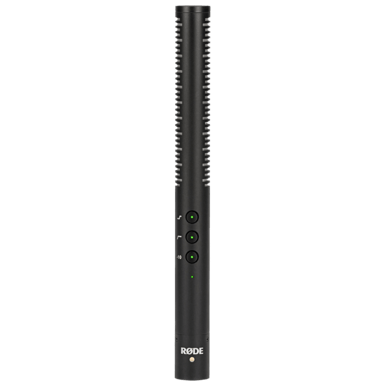
 Recaptor
 Rode NTG4 Review — A Compact, Pro-Grade Shotgun Mic That Punches Above Its Weight
When it comes to capturing crystal-clear dialogue or natural sound, few microphones manage to strike a balance between professional quality and practical usability quite like the Rode NTG4. Released in 2015, this Australian-made condenser microphone is designed with serious creators in mind—think podcasters, broadcasters, filmmakers, and audio professionals who need reliable sound performance without a complicated setup.
It’s built on Rode’s long-standing reputation for robust studio gear, but what makes the NTG4 particularly appealing is its mix of simplicity and technical refinement. Whether you’re working in a controlled studio or an unpredictable live environment, this mic promises clarity and control at a price that feels fair—especially when you consider you can find it for around $246.68 at B&H Photo Video.
Detailed Specs & Features
The NTG4 is a condenser shotgun microphone built around a supercardioid polar pattern, meaning it focuses tightly on the sound source in front while rejecting unwanted ambient noise from the sides. That makes it ideal for applications like voiceover, film dialogue, and outdoor interviews where directionality matters. The pressure gradient acoustic principle further enhances its sensitivity to subtle details.
Frequency-wise, it covers a wide range from 20 Hz up to 20,000 Hz, which ensures that both deep bass tones and sharp treble frequencies are represented faithfully. The 78 dB signal-to-noise ratio keeps the recording clean, while a 135 dB max SPL means it can handle loud environments without distortion. Add to that a -10 dB pre-attenuation pad and a 75 Hz low-cut filter, and you’ve got a microphone that can adapt to a range of recording situations.
Connectivity is handled through a standard XLR interface with balanced output, powered by 48V phantom power. This means it’s fully compatible with professional audio interfaces, mixers, and cameras that support XLR input. The microphone is wired-only, ensuring zero latency and a stable connection—perfect for critical broadcast or studio use.
Design & Build
Physically, the NTG4 is lightweight—just 0.27 lbs—and measures under nine inches in length. It’s built with a metal body and a matte coating that looks understated but professional. The metal grille protects the capsule and feels reassuringly solid, while the included shock mount and windscreen make it ready for immediate field or studio work. Rode even throws in a carrying case and mounting clip, rounding out a very complete package.
One notable omission, however, is resistance to environmental elements. There’s no water, dust, or drop resistance. So, while the NTG4 can be used outdoors, you’ll want to take care when shooting in rough weather or dusty environments.
Performance
On paper, the NTG4’s performance is impressive for its class. The combination of transformerless circuitry and low self-noise (just 16 dB) suggests recordings will be clean and natural, with minimal hiss or hum even in quiet environments. The lack of built-in DSP processing might sound like a limitation, but in truth, it keeps the sound organic—letting you handle post-processing your way.
The unidirectional pickup pattern delivers excellent off-axis rejection, perfect for isolating voices in noisy locations. Combined with the low-cut filter, it should tame rumble from air conditioning or distant traffic effectively. That said, users will notice it lacks certain modern features like AI noise cancellation or automatic gain adjustment—but these aren’t really expected in a pro-grade shotgun mic anyway.
Controls & Usability
Rode keeps it simple here: the NTG4 features a few onboard buttons and switches for toggling the high-pass filter and pad settings. It doesn’t have digital displays, gain knobs, or LED meters. Instead, it’s designed for fast, intuitive control—something professionals appreciate when working on set. There’s even a physical on/off switch, a small but handy addition that not all XLR mics offer.
Pros & Cons
Pros
- Excellent sound clarity with low self-noise (16 dB)
- Lightweight and durable metal construction
- Built-in low-cut filter and -10 dB pad add flexibility
- Comprehensive accessory bundle included (shock mount, windscreen, case)
Cons
- No built-in digital features or monitoring options
- Lacks weather or dust resistance for outdoor reliability
Price & Value for Money
At roughly $250 to $320 depending on the retailer, the Rode NTG4 sits in the mid-range category for professional shotgun microphones. Compared to higher-end options that can easily exceed $500, it offers exceptional value for anyone who needs pro-grade audio without blowing the budget. Its 1-year warranty and robust construction further enhance its value proposition.
That being said, it’s not for everyone. Beginners might find it overkill for simple streaming setups, while field recordists working in unpredictable weather may prefer a mic with stronger environmental protection. But for studio and controlled field work, it’s an outstanding choice.
Quick Take
The Rode NTG4 delivers clean, crisp, and directional sound in a lightweight, professional form factor. It’s no-frills, no-gimmicks—just reliable performance backed by quality engineering. If you value simplicity and sonic integrity, this mic fits the bill beautifully.
Closing Recommendation
For professionals and serious content creators, the Rode NTG4 represents a sweet spot between affordability and professional-grade quality. It’s built to handle the demands of studio, broadcast, and film environments while keeping operation straightforward. While it lacks modern “smart” features, its technical fundamentals remain rock-solid and timeless.
Verdict
Rating: Based on the specifications and overall feature set, we believe Rode NTG4 deserves 4.6 out of 5.
- Winner Feature → Low self-noise and clean transformerless output for professional-quality audio capture.
- Needs Improvement → Environmental protection and additional monitoring options would make it more versatile for field use.
Reviews 0
The good, the bad, and the brutally honest.Average Rating

More Microphones 1229
Unlock more awesome finds.